When Japan comes to mind, many people first think of the bustling energy of Tokyo, the lively atmosphere of Osaka, or the ancient charm of Kyoto. For me, however, Okinawa stands apart as a truly unique destination. Situated far from Japan’s main island of Honshu, it boasts a distinct Ryukyu culture, azure seas, and a wonderfully laid-back pace of life. Before arriving in Okinawa, I assumed its cuisine wouldn’t differ much from that of other regions in Japan; yet, the moment I set foot on this island, I discovered that Okinawa possesses a culinary culture entirely its own.
Over the course of my few-day journey, I wandered through the streets and alleys of Naha City—exploring bustling markets and seaside restaurants—and sampled a host of specialty dishes that can only be experienced in Okinawa. Each dish was imbued with the rich essence of island life, offering me a deeper appreciation for this remarkable island.
My First Bowl of Okinawa Soba: Simple, Yet Unforgettable
On my first day in Okinawa, no sooner had I set down my luggage than I eagerly headed to an Okinawa Soba shop recommended by the locals.
During my travels across Japan, I had eaten ramen, udon, and soba noodles, but this was my very first time trying Okinawa Soba.
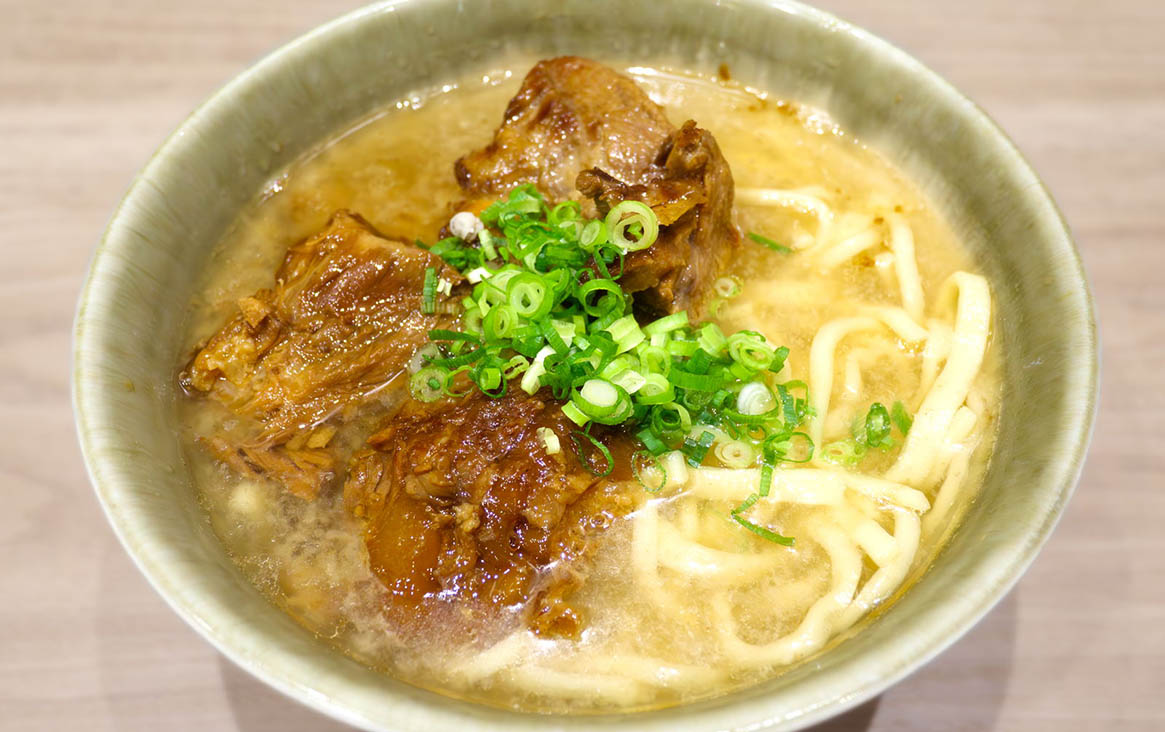
Before long, a steaming hot bowl of Okinawa Soba was placed before me.
Unlike traditional ramen, the broth of Okinawa Soba is lighter and more refreshing, carrying the savory aroma of bonito flakes and pork bones simmered to perfection. The noodles themselves strike a balance between udon and ramen—springy to the bite and delightfully chewy.
What captivated me most was the slice of sanchiku (three-layered pork belly) resting atop the noodles, stewed until incredibly tender.
It was so soft that it nearly fell apart as I gently lifted it with my chopsticks; it melted in my mouth—rich and succulent, yet entirely free of greasiness.
As I took a sip of the hot broth, I felt the fatigue of my journey instantly melt away.
Though humble and unpretentious in appearance, this single bowl of Okinawa Soba sparked a deep fascination within me for the culinary delights of Okinawa.
Culinary Discoveries on Kokusai-dori
Upon arriving in Naha, one simply cannot miss the famous Kokusai-dori.
Known as Okinawa’s “Miracle Mile,” this bustling thoroughfare is a hub teeming with shops, restaurants, and unique local snacks.
As evening fell, I strolled along the lively street; the lights of the shops lining both sides began to glow, and the air filled with the enticing aromas of various foods. The first thing that caught my eye was a small stall selling Ishigaki beef skewers.
The owner skillfully placed the beef over a charcoal fire; before long, it began to emit an enticing sizzling sound.
Freshly grilled, the beef had a slightly charred exterior while remaining tender and juicy on the inside.
After a light sprinkle of sea salt, the beef’s natural sweetness and savory flavor were fully brought to life.
Although the price wasn’t exactly cheap, every single bite made me feel it was well worth the cost.
Continuing further along, I discovered another small shop—this one selling “sea grapes.”
The first time I laid eyes on this ingredient, I was filled with curiosity.
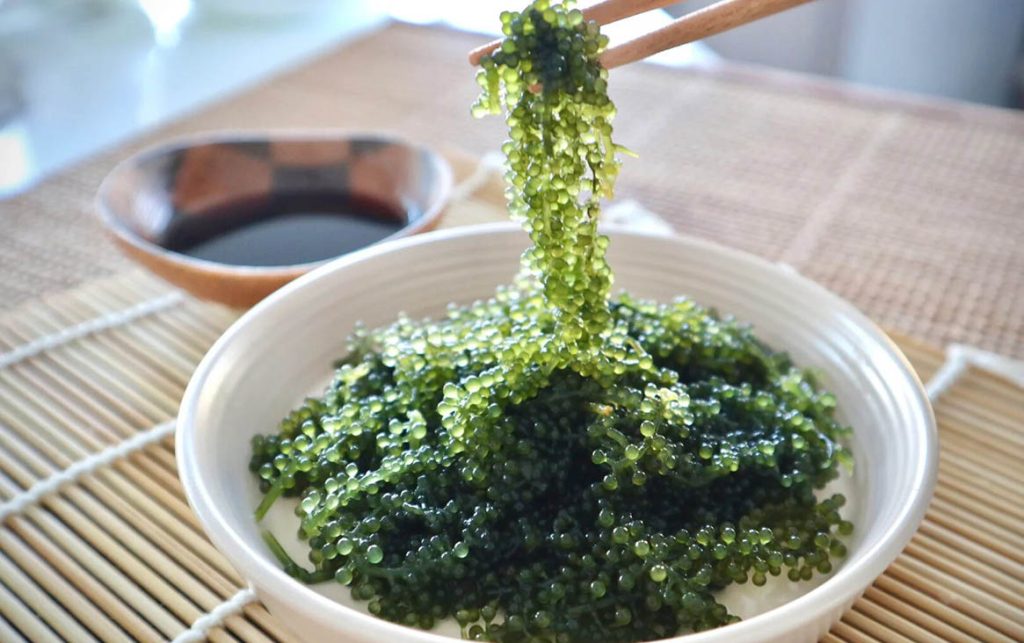
The translucent green granules hung from their stems like miniature grapes.
Upon entering the mouth, they burst with a subtle pop, carrying with them a faint, salty taste of the ocean.
This unique texture left a lasting impression on me.
The First Taste of Sea Grapes: A Gift from the Ocean
During my travels in Okinawa, sea grapes became a dish I ordered almost every single day.
One afternoon, I stopped by a seafood izakaya (Japanese-style pub).
The server brought over a plate of chilled sea grapes.
Sunlight streamed through the window, illuminating the emerald-green granules and making them look incredibly appetizing.
Dipping them into a special sauce before popping them into my mouth, the granules burst gently against my tongue—as if the very essence of the entire ocean had been distilled within them.
It is a flavor that is difficult to describe accurately in words.
It lacks the intense richness typical of traditional seafood, yet possesses a fresh, natural savoriness all its own.
I later learned that locals refer to sea grapes as “green caviar,” and they are considered one of Okinawa’s most iconic and distinctive ingredients.
Makishi Public Market: The Authentic Taste of Okinawa
If you wish to truly immerse yourself in a city’s culinary culture, a visit to its local market is absolutely essential.
Consequently, I made a point of setting aside time specifically to visit the Makishi Public Market.
This place is affectionately known as “Okinawa’s Kitchen.”
The market stalls are brimming with a dazzling array of seafood, tropical fruits, and unique local ingredients.
What surprised me most was the vibrant, colorful variety of fish on display.
Blue, red, yellow—fish of every hue were arranged neatly on beds of ice, looking more like works of art than mere food.
I selected a local reef fish and asked one of the restaurants upstairs to prepare it for me.
Before long, a sashimi platter was brought to my table.
The fish slices were translucent and crystal-clear, offering a texture that was both delicate and naturally sweet. Paired with Okinawa’s unique soy sauce and wasabi, every bite is bursting with the flavors of the ocean.
Sitting on the second floor of the market—eating while watching the crowds pass by—I felt as though I had truly immersed myself in the daily life of the locals.
Agu Pork Cuisine: Okinawa’s Ultimate Delicacy
Aside from seafood, Okinawa’s most renowned meat ingredient is undoubtedly Agu pork.
Many locals told me that if you haven’t tried Agu pork, you haven’t truly visited Okinawa.
So, one evening, I visited a restaurant specializing in Agu pork hot pot.
When the server placed the paper-thin slices of pork on the table, I was immediately captivated by their beautiful marbling.
A gentle dip into the simmering broth for just a few seconds is all it takes before it is ready to eat.
The moment it touched my palate, I finally understood why it is so widely adored.
The meat was tender and delicate, the fat possessed a natural sweetness, and it was completely devoid of the gamey odor often associated with ordinary pork.
Even after eating slice after slice, I never felt the slightest bit greasy.
Paired with Okinawa’s signature citrus-based sauce, the exquisite flavor of the meat was further enhanced.
It remains one of the most memorable dinners I enjoyed during my time in Okinawa.
Seaside Seafood BBQ
Surrounded by the sea on all sides, Okinawa naturally features seafood as a vital component of its culinary culture.
On the third day of my trip, I visited a popular barbecue restaurant situated right by the seaside.
Sitting in the open-air dining area, I had an unobstructed view of the azure ocean stretching out before me.
A gentle breeze drifted by, accompanied by the constant, soothing sound of the waves.
The setting itself was enough to lift my spirits.
I ordered grilled lobster, scallops, and fresh shrimp.
The ingredients were incredibly fresh; they required little more than simple seasoning to taste absolutely delicious.
The lobster meat, in particular, was sweet, firm, and infused with a subtle aroma of charcoal smoke.
Savoring the seafood while watching the sun slowly dip below the horizon—that sense of pure bliss remains as vivid in my memory today as it was in that moment.
Okinawan Bitter Melon Stir-fry with Egg: An Unexpected Delight
To be honest, before coming to Okinawa, I wasn’t a fan of bitter melon.
Consequently, when a friend recommended I try the Okinawan bitter melon stir-fry with egg, I felt a twinge of resistance deep down.
However, once I actually tasted it, it completely overturned my preconceived notions. Okinawan bitter melon has a relatively mild bitterness; when stir-fried with eggs, tofu, and luncheon meat, it creates a dish with a rich, satisfying texture.
The aroma of the eggs counterbalances the bitterness, yielding—quite unexpectedly—a unique and refreshing sensation.
This seemingly ordinary home-style dish eventually became one of my go-to choices whenever I ordered a meal.
Sometimes, the most delightful part of traveling lies in discovering that things you previously disliked can actually hold pleasant surprises.
Purple Sweet Potato Desserts and Okinawan Afternoon Tea
Beyond savory meals, Okinawan desserts are equally captivating.
The region is abundant in purple sweet potatoes, so this ingredient features prominently in many local sweets.
One sweltering afternoon, I stepped into a seaside café with a panoramic ocean view.
I ordered a purple sweet potato tart and an iced coffee.
The vibrant purple tart looked absolutely exquisite.

Upon taking a bite, the natural sweetness of the purple sweet potato blended perfectly with the crisp, buttery tart crust.
Sitting by the window, gazing out at the distant azure sea, time seemed to slow to a gentle crawl.
In that moment, I finally understood why so many people, once they arrive in Okinawa, find themselves reluctant to ever leave.
Taste Memories of Okinawa
My brief trip to Okinawa came to an end in the blink of an eye.
Before departing, I walked along Kokusai-dori one last time; gazing at the familiar restaurants and food stalls, my heart was filled with a sense of wistful reluctance to leave.
Compared to the bustling metropolises of Tokyo and Osaka, Okinawa feels more like a laid-back yet warm-hearted friend.
The cuisine here eschews overly complex culinary techniques in favor of a natural simplicity and genuine authenticity.
Whether it was the steaming bowls of Okinawan soba, the fresh and briny “sea grapes,” the premium Agu pork, or the sweet purple sweet potato desserts—every experience made me fall deeply in love with this island paradise. As the plane slowly took off, what surfaced in my mind was not images of tourist attractions, but rather those flavors that linger so delightfully in the memory.
I am certain that when I return to Okinawa in the future, I will once again follow these familiar scents to embark anew upon my own culinary journey across this island.