To me, the most captivating aspect of any city isn’t just its scenery or architecture, but rather the culinary delights hidden in its nooks and crannies. Before arriving in Seoul, South Korea, my impressions of the place were largely confined to the clichés seen in K-dramas—fried chicken and beer, steaming-hot Budae-jjigae (Army Stew), and an endless array of vibrant street food. However, once I actually stepped into the city, I discovered that Seoul is not merely a fashion capital, but a true gastronomic paradise.
Throughout my trip, I structured almost every day’s itinerary around food. From traditional Korean cuisine to trendy “Instagrammable” cafes, from late-night BBQ joints to bustling market stalls, every meal became an unforgettable memory of my journey. Below, I’d like to share a few dining spots in Seoul that left a lasting impression on me, in the hope that they might serve as a useful reference for anyone planning a trip to the city.
Myeongdong Kyoja: The Warmth of a Single Bowl of Knife-Cut Noodles
On my very first day in Seoul, I chose to head to the bustling Myeongdong shopping district.
After wandering around for a few hours, my stomach began to grumble in protest. A local friend had highly recommended that I visit a renowned, long-standing establishment: Myeongdong Kyoja.
As I approached the entrance, I was taken aback by the sheer size of the crowd waiting in line. Despite it being a weekday afternoon, the doorway was packed with a mix of tourists and local diners.
Once inside, the staff moved with impressive efficiency and quickly ushered me to a seat.
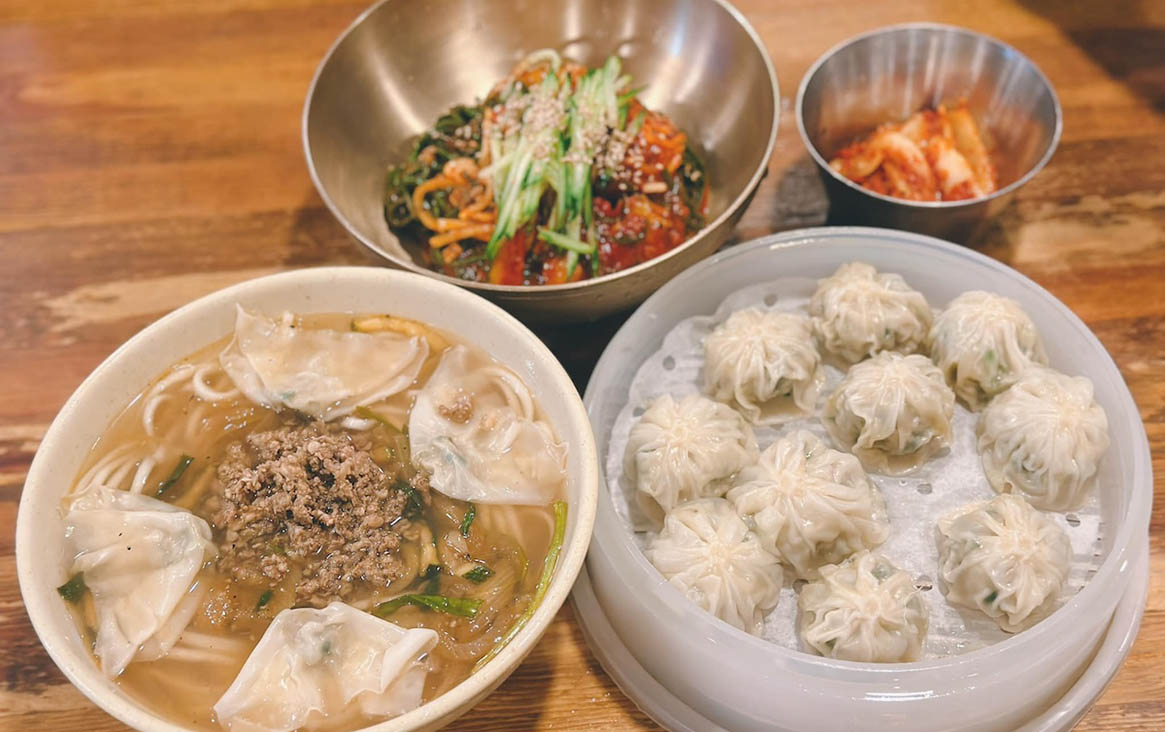
I ordered their signature knife-cut noodles (Kalguksu) and a plate of steamed dumplings.
Before long, a large bowl of steaming-hot noodles was placed before me. The rich chicken broth exuded an enticing aroma; the noodles were delightfully chewy yet smooth, and the soup base was savory and hearty without being greasy.
Especially in Seoul’s crisp, cool weather, taking a sip of that hot soup instantly warmed me from the inside out.
The steamed dumplings were equally delightful—thin wrappers encasing a generous filling of meat, bursting with savory juices with every bite.
Although this meal seemed simple on the surface, it allowed me to experience the humble, authentic charm of traditional Korean home-style cooking.
Gwangjang Market: The Most Authentic Taste of Seoul
If I could recommend only one place to experience Korea’s street food culture, I would undoubtedly choose Gwangjang Market. This is one of Seoul’s most iconic traditional markets—a setting frequently featured in food documentaries and variety shows.
The first time I stepped inside, I felt as though I had entered a massive culinary labyrinth.
Stalls were packed tightly on both sides, and a medley of enticing aromas wafted toward me from every direction.
The first thing to catch my eye was the traditional Korean mung bean pancake.
With practiced ease, the stall owner poured the mung bean batter onto a sizzling griddle, added vegetables and seafood, and fried it until it turned a golden, crispy brown.
Fresh off the griddle, the pancake was crispy on the outside and tender on the inside; paired with a slightly tangy dipping sauce, it made for a particularly appetizing treat.
Next, I sampled some gimbap (seaweed rice rolls), tteokbokki (spicy stir-fried rice cakes), and fish cake skewers.
The tteokbokki, in particular, was addictive: the sweet-and-spicy sauce clung perfectly to the soft, chewy rice cakes, leaving me craving more with every bite.
The most charming aspect of the market was the atmosphere—everyone gathering around the stalls, dining together in shared enjoyment.
Although they were complete strangers, everyone was united in the pure joy that good food brings.
This lively, authentic, and down-to-earth vibe is something that high-end restaurants simply cannot replicate.
Tosokchon Samgyetang: A Nourishing Experience for Travelers
When visiting Korea, Samgyetang (Ginseng Chicken Soup) is practically a mandatory culinary experience.
Following numerous recommendations, I made my way to Tosokchon Samgyetang—a highly renowned restaurant located near Gyeongbokgung Palace.
The restaurant’s exterior features a traditional Hanok (Korean house) architectural style; even before stepping through the door, I could already sense the rich cultural heritage of Korea.
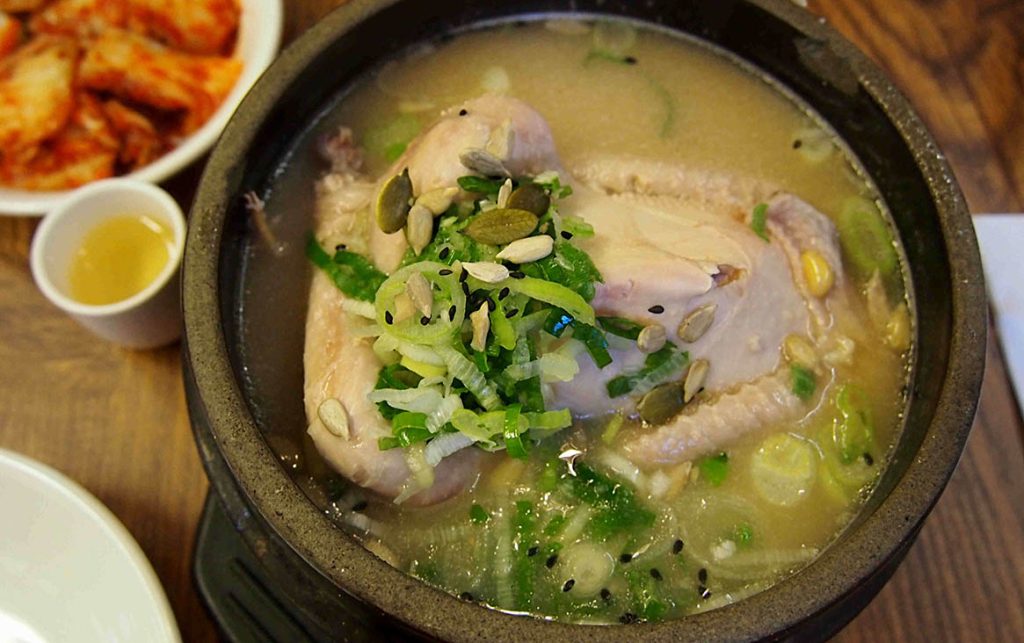
Shortly after placing my order, a steaming pot of Samgyetang was brought to my table.
A whole young chicken, stewed to fork-tender perfection, lay submerged in the broth; its cavity was stuffed with glutinous rice, ginseng, red dates, and chestnuts.
I took a sip of the soup first.
The rich chicken broth carried a subtle fragrance of ginseng—devoid of the bitterness I had anticipated—and went down remarkably smoothly.
The chicken meat fell right off the bone with the slightest touch of my chopsticks, while the glutinous rice, having absorbed the essence of the broth, tasted exceptionally aromatic and flavorful.
After finishing the entire pot, I felt a comforting warmth spread through my body—as if the fatigue of my travels had simply melted away.
It is no wonder that so many Koreans regard Samgyetang as a supreme tonic for health and vitality.
Hongdae Korean BBQ: An Authentic Barbecue Experience
When the topic turns to Korean cuisine, Korean BBQ is an absolute must-mention—a subject that simply cannot be overlooked. While strolling through Hongdae, I casually wandered into a barbecue restaurant packed with locals.
The place was buzzing with energy, filled with the constant sizzling sound of meat grilling.
I ordered some Hanwoo (Korean beef) and pork belly.
The servers were proactive in helping to grill the meat, constantly adjusting the heat to perfection.
As the pork belly turned a golden brown, its savory aroma instantly filled the entire table.
Following the traditional Korean way of eating, I wrapped a piece of grilled meat in a fresh lettuce leaf, adding slices of garlic, kimchi, and spicy sauce before taking a bite.
The complex layers of flavor were a revelation.
The meat—a perfect balance of lean and fatty cuts—was tender and juicy, while the tangy spiciness of the kimchi perfectly cut through the richness of the fat.
Paired with a glass of ice-cold soju, the sense of satisfaction was simply indescribable.
It was one of the most delightful dinners I had during my time in Seoul.
Ikseon-dong Cafés: A Blend of Traditional and Modern Korea
Beyond full-course meals, Seoul’s café culture is equally captivating.
Ikseon-dong has emerged in recent years as a highly popular and artsy neighborhood.
It preserves many traditional Hanok (Korean traditional houses) while simultaneously serving as a hub for a multitude of unique and stylish cafés.
One afternoon, I stepped into a Hanok café tucked away in a narrow alleyway.
The wooden architecture exuded a charming, old-world elegance, and the courtyard was adorned with lush greenery and stone lanterns.
I ordered a cup of hand-drip coffee and a slice of strawberry cream cake.
Sunlight streamed through the windows into the interior, filling the air with the fragrant aroma of coffee.
I sat quietly by the window, watching the stream of tourists passing by.
In that moment, time seemed to slow down.
Compared to the bustling tourist attractions, these moments of leisurely tranquility became the most cherished memories of my trip.
Late-Night Eats in Dongdaemun: The Charm of Seoul’s “City That Never Sleeps”
Seoul is a city renowned for its vibrant nightlife.
One evening, I found myself browsing through the shopping centers in Dongdaemun until nearly midnight.
I had assumed that most restaurants would have already closed, but to my surprise, the streets were still brightly lit and bustling with activity.
I stopped at a 24-hour restaurant specializing in traditional Korean soup and rice dishes.
The dining hall was packed with office workers just getting off their late shifts, as well as late-night tourists.
I ordered a bowl of pork bone soup with rice.
The milky-white broth, having simmered for hours on end, was incredibly rich and deeply flavorful. With the addition of rice, the entire bowl of soup-rice became even more satisfying and filling.
Sipping a mouthful of hot soup late at night while gazing out at the still-bustling streets, I truly felt the unique charm of Seoul—a city that never sleeps.
Fried Chicken by the Han River: The Ultimate K-Drama Experience
If there is one culinary delight that best embodies the romance found in Korean dramas, it is undoubtedly fried chicken paired with beer.
On the evening of the final day of my trip, I headed to Han River Park.
Many people were sitting on the grass—picnicking, chatting, or riding bicycles.
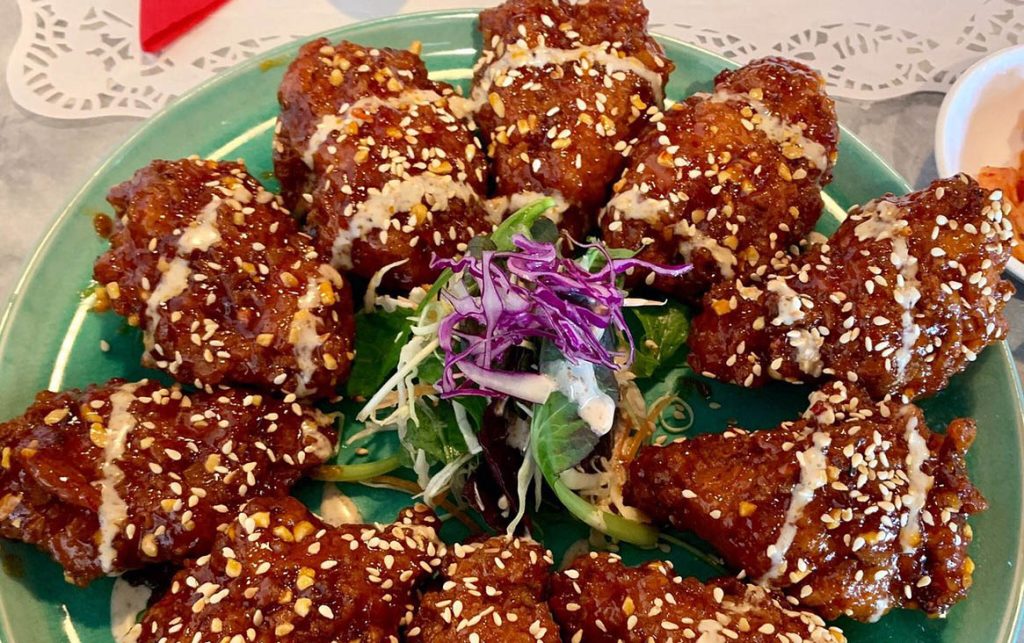
I used my phone to place an order for some Korean-style fried chicken and beer.
Before long, a delivery driver arrived to drop off my meal at the designated spot.
The crispy fried chicken, coated in a sweet and spicy sauce, offered a delightful contrast: crunchy on the outside, tender on the inside.
As the sun slowly dipped below the horizon, the surface of the Han River shimmered with golden light.
I savored my fried chicken while admiring the Seoul skyline at night.
That sense of effortless ease and relaxation helped me fully understand why Koreans are so deeply enamored with the culture of picnicking by the Han River.
Culinary Memories from My Seoul Journey
My trip to Seoul—spanning just a few short days—came to an end all too quickly.
Looking back on the entire journey, I realized that what lingered in my memory wasn’t merely the solemn grandeur of Gyeongbokgung Palace, the nighttime vistas from Namsan Tower, or the bustling energy of Myeongdong; rather, it was those unforgettable culinary experiences that left a lasting impression.
From the lively Gwangjang Market to the tranquil Hanok (traditional Korean house) cafés, and from nourishing Samgyetang (ginseng chicken soup) to aromatic Korean BBQ, every single flavor allowed me to gain a deeper understanding of this city.
Food does more than just satisfy the palate; it creates an emotional bond between people and the city they inhabit.
The reason Seoul remains so vivid in my mind is not simply because it possesses the vitality of a modern metropolis, but because every restaurant and every street stall here carries within it the living stories of Korean life.
As my plane lifted off from Seoul’s skies, the images floating through my mind were not of shopping bags, but of a steaming bowl of Samgyetang, a freshly griddled mung bean pancake, and that crispy, delicious fried chicken enjoyed by the banks of the Han River.
Perhaps that is the most enchanting aspect of culinary travel: even after the journey has concluded, the flavors linger in your memory, leaving you yearning to return to Seoul once again.