1. Arrival in the City of Light and Sea
The moment I stepped off the train at Gare de Nice-Ville, the air smelled different—cleaner, saltier, tinged with something herbal. Maybe it was the lavender shops near the station. Or maybe it was just my anticipation coloring every sensation. Nice had been on my list for years, and now that I was here, I felt both light on my feet and deeply hungry—for views, stories, moments, and especially food.
Even before checking into my little rented apartment just off Rue Bonaparte, I made a mental note: I wasn’t going to leave this city without sitting at a wobbly little table in the old town, eating a proper Salade Niçoise. Not some pre-mixed imitation, not a tourist-tweaked version, but the real thing—sharp olives, sun-ripened tomatoes, good oil, maybe anchovies, maybe not.
I had no plan. That was part of the joy. I’d follow my instincts, and more importantly, my nose.
2. Wandering Vieux Nice
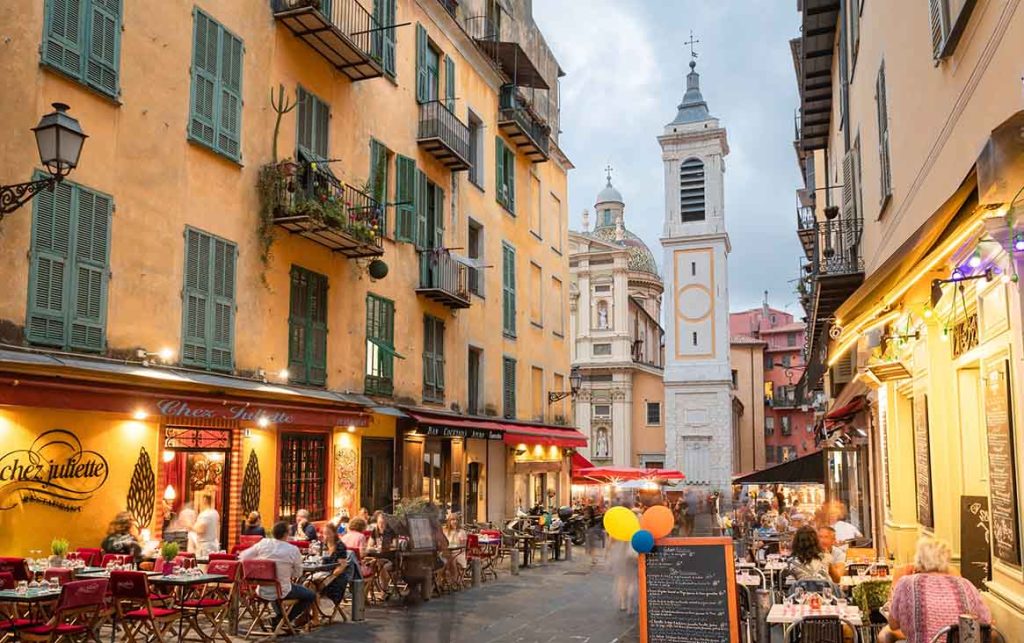
I spent my first full day simply walking. The narrow, shadowed streets of Vieux Nice had that kind of timeless atmosphere that made me lose track of time. Laundry flapped from balconies above brightly colored shutters. Locals in linen shirts and wide hats stood in doorways speaking rapid French or Italian. The market on Cours Saleya was buzzing—heirloom tomatoes, fragrant basil, towers of olives, wheels of cheese the color of old parchment.
I kept asking, not always in perfect French, where I could find a good Salade Niçoise. People didn’t point me to a specific place at first. Instead, they gave opinions.
“Only with anchovies,” one older man told me with finality, while selling radishes at the market.
“No green beans. Never potatoes!” a woman chimed in as she handed me a sample of her homemade tapenade.
It became immediately clear this wasn’t just a salad—it was a belief system.
3. My First Attempt: A Café Near the Flower Market
I stopped for lunch at a modest café right near the flower market, drawn in by the chalkboard out front that read, simply: Salade Niçoise – Maison. I sat beneath a faded orange umbrella, and ordered.
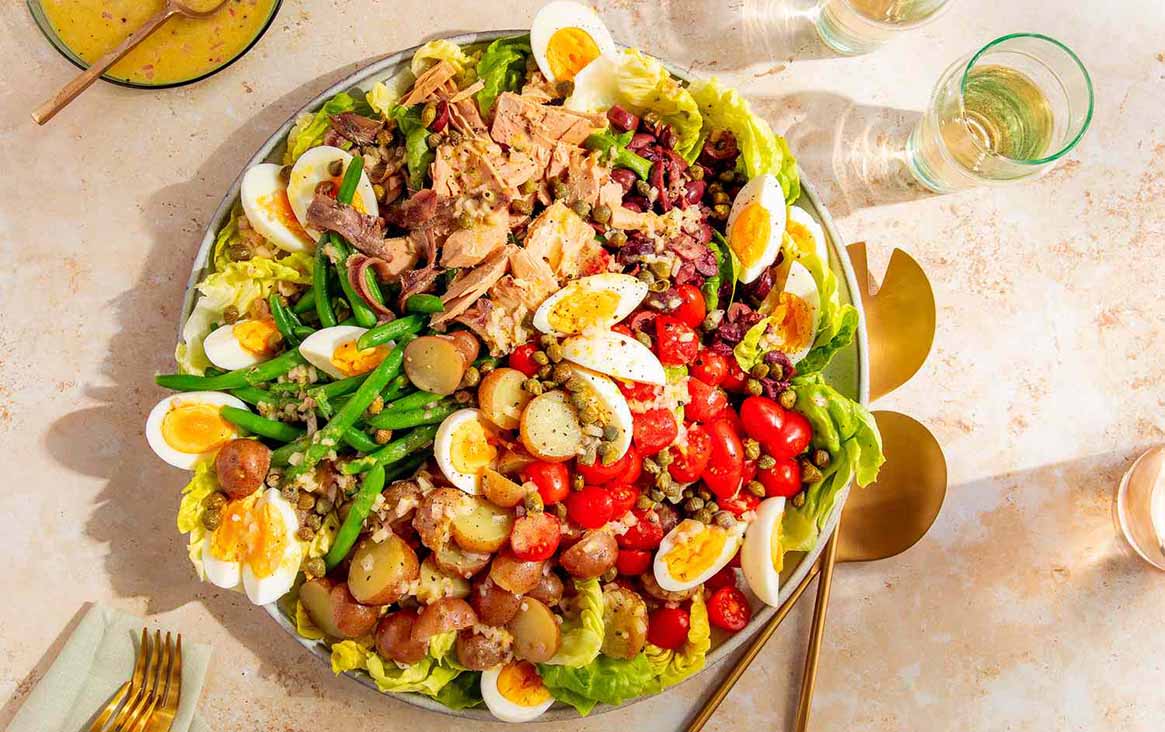
The salad came in a wide, shallow bowl. Tomatoes that tasted like sunshine, hard-boiled eggs sliced precisely, anchovy filets folded like ribbons, deep black olives—not the rubbery kind from a jar, but sharp, salty Niçoise ones. No green beans. No potatoes. Just lettuce, red peppers, tuna flakes that tasted like they’d been packed in oil, not water.
It was good. Really good. But something felt off. Maybe too neat? Maybe too safe?
The search wasn’t over.
4. A Hidden Courtyard and a Deeper Taste
Two days later, I stumbled upon a tucked-away spot that wasn’t on any list I’d seen. It didn’t have a name outside, just a green awning and a single waiter standing at the door, arms crossed, watching the street like a hawk.
Inside, a shaded courtyard opened up, vines twisting above and quiet French jazz playing through a dusty speaker. The place smelled of garlic and grilled peppers. I asked if they had Salade Niçoise.
He nodded, one word: “Toujours.”
This one came on a large ceramic plate. No lettuce at all this time. Just sliced tomatoes, raw green peppers, hard-boiled eggs cut in halves, anchovies that were glistening, and a generous spoon of black olive tapenade off to the side. Everything had been drizzled—no, caressed—with olive oil that smelled like something picked an hour ago.
I took a bite. Then another. The anchovies snapped with salt and sea. The egg yolk was firm but not dry. The tomatoes… if I could have bottled that taste, I would have brought home a hundred jars. It was rustic. Assertive. And yet, not heavy.
This was the first time I understood why locals had such strong opinions. It was alive, this food. And full of place.
5. Following the Anchovy Trail
Over the next few days, I found myself chasing anchovies across the city. Some places swore by fresh tuna. Others clung to the salty little fillets. One small restaurant near Place Garibaldi served a version with both, unapologetically. They also added fava beans, which I hadn’t seen elsewhere.
At another place by the harbor, a young chef in a stained apron insisted on serving it in layers: thin slices of tomato and egg, alternating with curls of green pepper, anchovies woven in like netting.
“I like balance,” he told me in accented English. “Each fork must taste of sea and sun.”
That one might have been the most beautiful. But taste-wise, the tiny place in the courtyard still held the top spot.
6. What Locals Say
In conversations with locals, I started to grasp that Salade Niçoise wasn’t a static thing—it was more like jazz. There was a base melody, a set of understood rules, but within that, endless improvisation.
A man at the olive stall in the market told me his grandmother used to make it with torn bread soaked in tomato juice at the bottom. A woman who ran a bookstore near Rue Droite said she always adds artichoke hearts and called anyone who used canned tuna a criminal.
Another man, who I met sitting next to me at a tiny wine bar, confessed that he only ever eats his with rosé. “Red wine is too heavy. White is too shy. Rosé,” he said, holding up his glass, “is just cheeky enough.”
I started to see the dish not as a recipe, but as a cultural mirror.
7. A Side Note on Ingredients
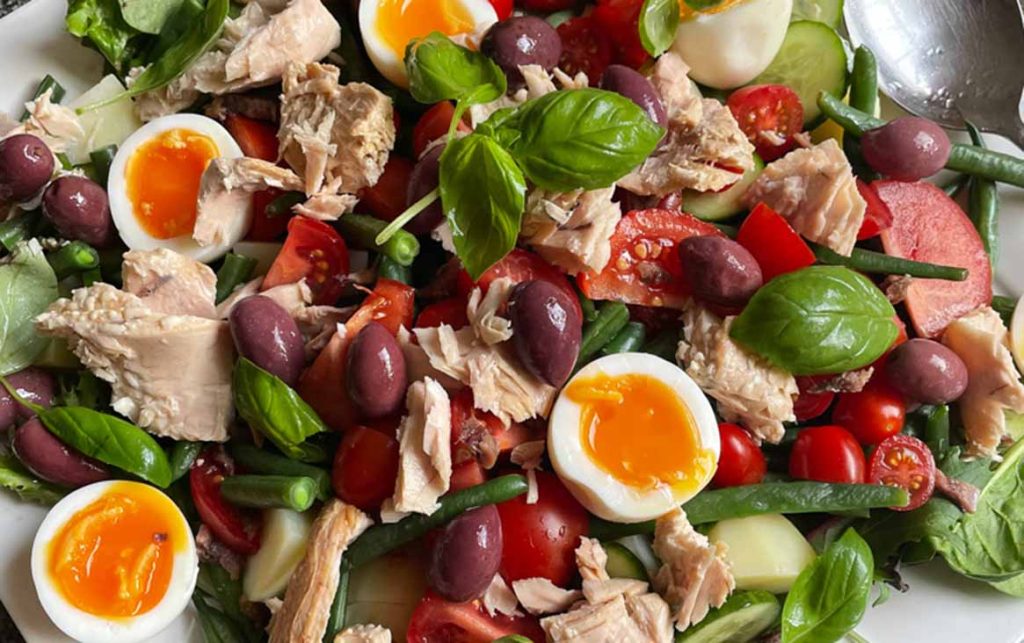
Every proper Salade Niçoise begins with a certain clarity of intention. The olives are always the sharp, briny Niçoise variety. Tomatoes must be ripe but not mushy. Anchovies, if used, should be real—not those sad strips that come in cheap tins. Eggs must be hard-boiled but not chalky.
No one here seemed to appreciate the version I’d grown up seeing in cookbooks back home—full of boiled potatoes, barely any anchovy, and often served chilled to the point of blandness.
In Nice, it was all about texture and temperature. Warm tomatoes. Cool eggs. Crunchy peppers. A kind of bold, immediate freshness.
I started trying to imagine making one myself, but even as I scribbled ingredient lists into my notebook, I knew I couldn’t replicate the air. The sun. The background noise of scooters and seagulls and clinking glasses.
8. My Final Salad
I had only one night left in Nice. I decided to return to the courtyard place with the green awning. This time, I didn’t ask for the menu. I just sat down, and the same waiter from before nodded at me like he remembered.
The salad arrived twenty minutes later. Slightly different again—thicker tomato slices, more olives, no peppers this time. The tapenade was stronger, almost garlicky.
It didn’t matter. It was still perfect. Not in the sense of symmetrical plating or trendy innovation, but in that deeper, fuller way: it tasted like a conversation, like an argument, like a memory.
I lingered longer than I meant to, sipping a glass of local rosé and listening to the rustling vines above me. The plate sat empty, save for one last olive.
9. Postscript from the Promenade
I walked the Promenade des Anglais that night, the Mediterranean shimmering in a way that only made sense after a good meal. Lights danced on the surface of the water, and I caught whiffs of salt and sunscreen and whatever flowers were in bloom along the beach.
I didn’t take many photos on this trip. Some things felt better kept in the mind, where taste and sound and light can blend together.
The best Salade Niçoise? Maybe it was that one in the courtyard. Or the café near the market. Or the one layered like a painting. I’m not sure anymore.
But I do know I’ll be chasing that flavor—of sun, of salt, of something entirely local—for a long time to come.