1. Planning the Route
The idea of traveling to Nice by train started taking shape during my last few days in Grenoble. I was in the mood for a change of pace—both in climate and scenery. The chill of the Alps had its charm, but the call of the Mediterranean was strong. When I looked at the map, the route seemed like a perfect opportunity to enjoy France’s landscape through the window of a high-speed train.
Before anything else, I needed to book a ticket. I used the SNCF Connect website, which is the official booking platform for French trains. It’s in both French and English, pretty intuitive, and accepts international cards. There are other platforms too, like Trainline and Omio, but I stuck with SNCF Connect this time because it often shows the most accurate train schedules and connections.
I searched for a direct TGV from Grenoble to Nice. Turned out, there wasn’t a direct high-speed train. But SNCF offered multiple options with connections—some via Valence TGV, others through Marseille. I opted for a route that transferred in Marseille Saint-Charles. Total travel time was just under 7 hours. It wasn’t the fastest option, but it allowed a decent layover and gave me a chance to stretch my legs. I selected a second-class ticket, which was perfectly fine for my needs. First class offers a bit more space and quieter carriages, but I’ve always found second class comfortable enough.
Once the booking was done, I downloaded the e-ticket to the SNCF Connect app. No printing needed.
2. Morning in Grenoble
The day of the trip started early. I woke up just before 7 a.m. to pack the last of my things. My train was scheduled to leave Grenoble’s main station—Gare de Grenoble—at 08:44. It was only a 20-minute walk from my hotel, and the morning air had that familiar crispness I’d come to expect in the foothills of the Alps.
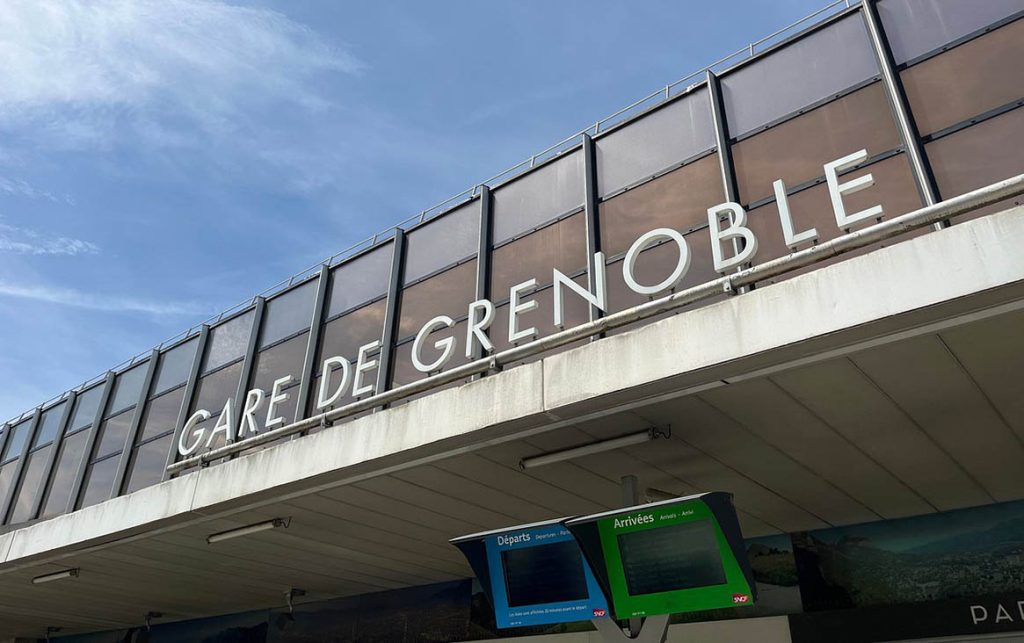
Grenoble is not a huge city, but the station was busier than I expected. Mostly commuters, students, and a few people with luggage like mine. I found the departure board easily. My train was listed, a TER regional train heading toward Marseille, where I’d change to a TGV.
I grabbed a quick espresso and a croissant at a small café inside the station. French stations all seem to have these—you never have to go far for caffeine. With a few minutes to spare, I went through to the platform.
The regional train was already there. No assigned seats, so I picked one by the window.
3. First Leg: TER to Marseille
The TER part of the trip took just under three hours. These regional trains don’t move at high-speed, but they’re smooth and reliable. The scenery was nothing short of beautiful. The train wound its way through valleys and small towns, past vineyards, stone villages, and open farmland. I saw sheep grazing in the distance and rows of leafless trees that hinted at vineyards in their winter slumber.
There weren’t many people in my carriage. Some had headphones on; a few older women chatted quietly. One man was reading a newspaper the entire time.
The train stopped briefly in Valence, Avignon, and a few other small towns. Each stop felt like a peek into another quiet corner of southern France.
4. Marseille Saint-Charles Station
The train arrived in Marseille a few minutes after 11:30. I had about 45 minutes before my TGV to Nice. Marseille’s station is large, loud, and full of character. The moment I stepped off the train, I could feel the temperature difference—it was at least 8 degrees warmer than Grenoble.
I followed the signs up to the main concourse, which opens onto a massive terrace overlooking the city. I stood there for a while, looking out over the rooftops and out to sea. That view alone was worth the stopover.
I grabbed a sandwich from Paul (the bakery chain you find in nearly every station in France) and found a bench in the waiting area. When the platform number for my TGV was announced, I made my way down with about 10 minutes to spare.
5. Onboard the TGV
The TGV duplex train was sleek and silver, with two levels. I had a seat on the upper deck, carriage 12. Climbing the narrow staircase to the top level, I found my place by the window. There was space overhead for my bag and enough legroom to stretch out a bit. The seat was firm but comfortable, with a fold-out table, power outlet, and a small trash slot under the window.
As the train pulled out of Marseille, I noticed how quickly we picked up speed. It’s almost imperceptible at first—no lurching or dramatic engine noise—just a gradual acceleration until the trees outside started to blur.
Wi-Fi was available, though a bit patchy at times. I didn’t mind. I wasn’t in the mood to be online. Instead, I took out my book and let the soft hum of the train be my background noise.
6. The Riviera Unfolds
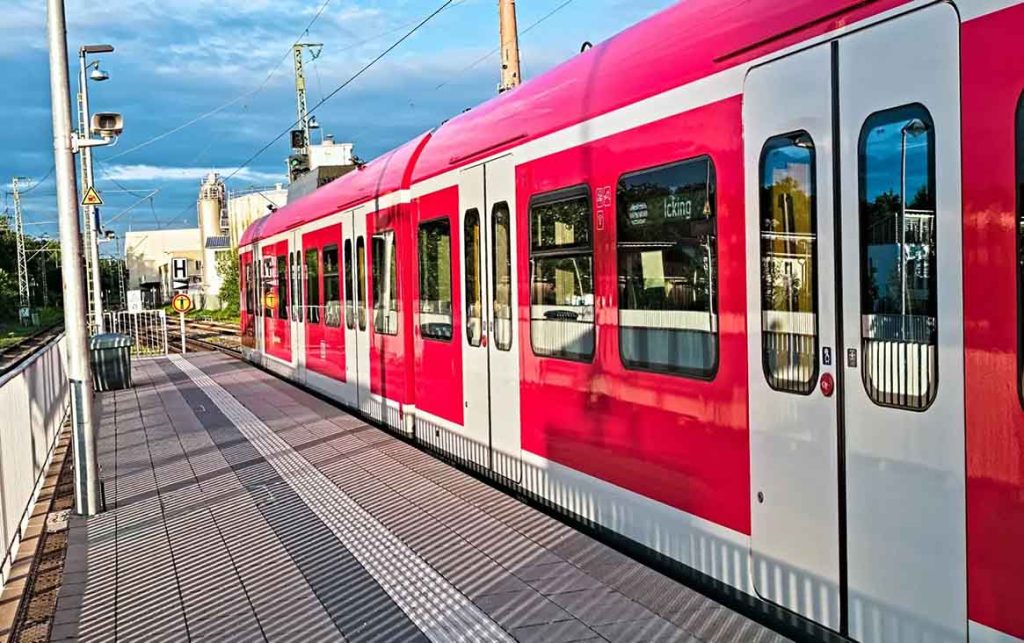
The landscape began to change as we moved east along the coast. The scrubby trees of Provence gave way to glimpses of the sea. Somewhere past Toulon, I started to catch glimpses of brilliant blue water between hills and tunnels.
I pressed my forehead against the glass, trying not to miss anything. Terracotta rooftops dotted the hillsides, and occasionally the train would curve just enough to offer a full view of the coastline below. The sea sparkled. It actually sparkled.
We passed Antibes, then Cannes. Each name brought a sense of cinematic romance. The names felt both familiar and brand new.
7. Arrival in Nice
The train rolled into Nice Ville station a few minutes ahead of schedule. The station is clean and compact, with arched windows and a cream-colored facade. I stepped out of the train and immediately felt the warm Mediterranean air.
No passport checks, no customs—just a straight walk from the platform to the street. The station exits onto Avenue Thiers, with palm trees lining the street and the unmistakable blue sky overhead.
I walked the short distance to my hotel, a small place just off the Promenade des Anglais. Along the way, I passed fruit stalls, people sipping espresso at sidewalk cafés, and scooters zipping between cars. Everything felt brighter here.
8. Post-Arrival Reflection
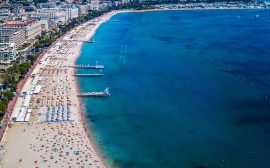
Later that evening, after a shower and a short nap, I wandered down to the waterfront. The sea looked exactly as it had from the train: wide, shimmering, impossibly blue. The promenade was full of joggers, families, and couples walking slowly toward the sunset.
It’s rare that the mode of travel becomes such a memorable part of the trip. But the combination of speed, comfort, and the changing landscape made this train ride more than just a connection between two cities. It was a moving postcard, a slideshow of changing climates, cultures, and colors. And the arrival in Nice, with its relaxed energy and salt-tinged air, felt like a reward after a journey well taken.
I sat on a stone bench by the beach, watching the waves roll in and out, thinking of all the places I had passed that day. The Alps, the vineyards, the old cities, the shining sea—all of it now part of the journey that had started that morning in a cool, quiet corner of the mountains.